
The sacrificial service is one of the special practices carried out by Muslims during Eid al-Adha and Tasyrik. Apart from being a form of obedience to Allah SWT, sacrifice is also a means of sharing happiness with others, especially people in need. However, in practice there are still many Muslims who do not understand in depth the law of sacrificial law and the requirements for legal sacrificial animals.
In fact, understanding the Shari’a law on sacrifice and the requirements for a valid sacrificial animal is very important so that the sacrificial worship carried out is truly accepted and in accordance with Islamic guidance. It’s not just a matter of intention, but also includes the choice of animal, the time of slaughter, and who is allowed to sacrifice.
So, what are the requirements for a valid sacrifice according to Islam? Here’s the complete explanation!
Understanding Sacrifice in Islam
Qurban comes from the word “qarraba” which means to bring closer. In Islamic law, sacrifice is the act of slaughtering certain livestock on Eid al-Adha and Tasyrik Day as a form of approach to Allah SWT.
This worship imitates the story of Prophet Ibrahim AS, who was willing to sacrifice his son, Prophet Ismail AS, in order to carry out Allah’s commands. From this incident, Muslims learned about sincerity, piety and sacrifice.
Sharia Law of Sacrifice in Islam
Scholars have different opinions regarding the sharia law of sacrifice. The majority of ulama from the Shafi’i, Maliki and Hanbali schools of thought state that sacrificing is a legal sacrifice which is sunnah sukakadah or a sunnah which is highly recommended for capable Muslims.
Meanwhile, the Hanafi school of thought believes that sacrificial sacrifice is obligatory for Muslims who have sufficient assets. Even though there are differences of opinion, all scholars agree that sacrificial worship has great priority in the sight of Allah SWT.
Rasulullah SAW also always carried out sacrifices every year. Therefore, Muslims who are given more sustenance are strongly encouraged to participate in sacrificing as a form of gratitude and social concern.
Conditions for People Who Sacrifice
Before understanding the requirements for a legal sacrificial animal, it is also important to know the requirements for the person carrying out the sacrificial service. Here are some of the conditions:
- Muslim
Sacrifice is a special worship for Muslims, therefore the person who sacrifices must be a Muslim.
- Puberty and Reason
The person making the sacrifice should be of puberty and have common sense so that he or she is able to understand the worship being carried out.
- Have Financial Capability
Islam does not burden its people with worship. Likewise, sacrificial worship is recommended for those who have sufficient assets after their family’s basic needs are met.
- Done with Good Intentions
Sacrifice must be done with sincere intentions and solely for Allah SWT, not to show off or with the intention of seeking praise from other people.
Requirements for Legal Sacrificial Animals
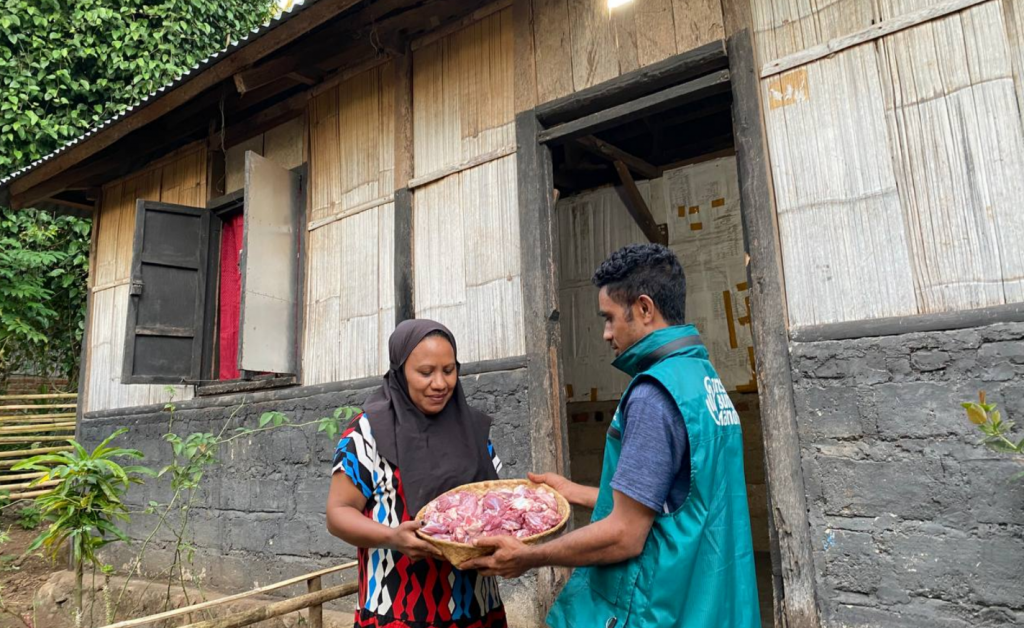
One of the most important things in the sacrificial service is ensuring that the animal being slaughtered meets the legal provisions of the sacrificial law. Here are some requirements for legal sacrificial animals that need to be considered.
- Types of Sacrificial Animals Allowed
In Islam, sacrificial animals can only come from livestock as follows:
- Goat
- Sheep
- Cow
- Buffalo
- Possible
Animals other than these types are considered invalid and cannot be used as sacrificial animals.
- Age of Sacrificial Animals
The age of the sacrificial animal is also an important part in determining whether the sacrifice is valid or not. The following are the general provisions regarding the requirements for a sacrificial animal to be considered valid according to age:
- Goats must be at least 1 year old
- The lamb is at least 6 months old and when it looks big and healthy
- Cow or buffalo at least 2 years old
- Camels must be at least 5 years old
Ensuring the age of the animal to be sacrificed is in accordance with the sacrificial law is an important part of the validity of the sacrificial service.
- Animals must be healthy and not disabled
Islam teaches that the animal to be sacrificed should be in good condition. Animals that are disabled or sick are considered not to meet the requirements for legal sacrificial animals.
Some defects that make an animal unfit to be used as a sacrificial animal include the following:
- Blindness in one or both eyes
- Severe pain
- So thin that he has no bone marrow
- Very lame
- The ears or tail are mostly cut off
Therefore, before buying and selecting a sacrificial animal, it is important for us to check its physical condition carefully.
- Own Animals or Obtained Halally
The animal to be sacrificed must come from halal property and be legally owned. Animals resulting from theft, fraud or disputes are considered not to meet the requirements for legal sacrificial animals.
Apart from that, purchasing animals should also be done from trusted sellers or institutions so that their quality and health are guaranteed. Buying from a trusted seller or institution also makes us more confident about the halalness of the sacrificial animal.
- Sacrifice Slaughter Time
Apart from paying attention to the requirements for the sacrificial animal in terms of type, physique and age, The time of slaughter also determines whether the sacrificial service is valid or not.
In accordance with the Shari’a on sacrifice, the slaughter of sacrificial animals can only be done after Eid al-Adha prayers on the 10th of Dzulhijjah until sunset on the 13th of Dzulhijjah.
If the slaughter is carried out before the Eid al-Adha prayer or after the day of Tashrik, then the slaughter is not counted as a sacrifice but is just an ordinary slaughter.
Procedures for Slaughtering According to Sharia
In order for the sacrifice to be valid and worthy of worship, the slaughtering process must also comply with the Shari’a of sacrifice.
Islam pays great attention to animal welfare, even during the slaughtering process. Therefore, it is important for us to understand several etiquettes for slaughtering sacrificial animals as follows:
- Read basmalah and takbir
- Use a sharp knife
- Don’t abuse animals
- Facing Qibla
- Carried out by Muslims who understand the procedures for slaughtering
Cover
Sacrifice is not just an annual celebration or tradition. More than that, sacrifice is a meaningful worship that teaches sincerity, piety and social concern. In order for this worship to be valid and worthy of reward in the sight of Allah SWT, Muslims who want to sacrifice need to understand well the Shari’a law of sacrifice and the various requirements for valid sacrificial animals according to religious guidance.
In order to ensure that our sacrificial services are carried out in accordance with the Shari’a, make sure to always choose a trusted sacrificial provider. Currently, there are many choices of sacrificial institutions or service providers that you can choose from. In fact, many of them provide online sacrificial programs which can be done easily but still comply with the law of sacrificial law.
One of them is the Sacrifice in the Interior program from the Insan Bumi Mandiri Foundation. Through this program, you can be sure that your sacrificial worship is in accordance with the Shari’a, safe, transparent and on target because it will be distributed to rural residents who need it and rarely receive distribution of sacrificial meat.
PakarPBN
A Private Blog Network (PBN) is a collection of websites that are controlled by a single individual or organization and used primarily to build backlinks to a “money site” in order to influence its ranking in search engines such as Google. The core idea behind a PBN is based on the importance of backlinks in Google’s ranking algorithm. Since Google views backlinks as signals of authority and trust, some website owners attempt to artificially create these signals through a controlled network of sites.
In a typical PBN setup, the owner acquires expired or aged domains that already have existing authority, backlinks, and history. These domains are rebuilt with new content and hosted separately, often using different IP addresses, hosting providers, themes, and ownership details to make them appear unrelated. Within the content published on these sites, links are strategically placed that point to the main website the owner wants to rank higher. By doing this, the owner attempts to pass link equity (also known as “link juice”) from the PBN sites to the target website.
The purpose of a PBN is to give the impression that the target website is naturally earning links from multiple independent sources. If done effectively, this can temporarily improve keyword rankings, increase organic visibility, and drive more traffic from search results.