As Eid al-Adha approaches, many Muslims begin preparing for sacrificial services. However, many people still wonder about who is obliged to sacrifice according to Islamic law. This question is important to understand so that Muslims can carry out their worship correctly according to their abilities and religious requirements.
Sacrifice is a form of worship that is highly recommended in Islam. Apart from being a form of obedience to Allah SWT, this worship is also a means of sharing with others, especially for people who rarely enjoy meat. Therefore, understanding who is obliged to sacrifice is the first step before carrying out this noble worship.
There are several criteria requirements for Muslims who are recommended or even obliged to carry out sacrificial worship. Here’s the explanation!
Muslim
Sacrifice is a special worship for Muslims. So the first condition for those who are obliged to sacrifice is that they are Muslim. Non-Muslims have no obligation to perform this worship because sacrifice is a form of approaching Allah SWT.
Meanwhile, if there are non-Muslim people who carry it out then this cannot be said to be a sacrifice, but only slaughtering livestock.
However, donations of sacrificial animals given by non-Muslims will be counted as alms which will certainly also be rewarded in the form of rewards.
Reasonable and Mature
Even though you are Muslim, there are still other requirements that need to be met when a Muslim wants to carry out the sacrificial ritual, namely that he must be of sound mind and have reached puberty.
Therefore, children who have not reached puberty are not obliged to make sacrifices. Even so, parents can still sacrifice for their children as a form of education and sunnah worship.
Not only has he reached puberty, the requirement to carry out the sacrificial service is to be intelligent. This means that people who are not rational, such as crazy or drunk, do not have the obligation to carry out sacrificial services.
Financially Independent
The discussion about who is obliged to sacrifice cannot be separated from the requirements of ability. Apart from being a Muslim who is sensible and has reached puberty, the sacrificer must also be someone who is considered financially independent.
The reason is, Muslims who are financially independent can definitely afford to buy sacrificial animals so that sacrificial worship should not be burdensome at all. Carrying out sacrifices can be done if a person has excess assets after the basic needs of himself and his family have been met.
If a Muslim is a slave who has to pay a certain amount of money to redeem himself, then that person is not obliged to carry out sacrifices because he is classified as a person who is not yet free.
This condition shows that Islam never burdens its people. If financial conditions are deemed inadequate, then sacrificial worship is not obligatory.
Not currently in debt
If a Muslim still has a number of debts that cannot be paid off, then that person is not obliged to carry out the sacrificial service. Likewise, those who are not in debt are required to carry out the sacrificial service as soon as possible.
A Muslim who still has debts is advised to pay off the debt first as much as possible without a time limit, because sacrifice will not burden anyone.
If the debt has been paid off, the person who wants to sacrifice can save so that they can immediately carry out their intention to sacrifice.
Have sufficient cash and non-cash assets
If a Muslim has sufficient assets, both cash and non-cash assets, he is obliged to carry out the sacrificial ritual by sacrificing part of his assets.
Assets referred to as non-cash assets are items such as luxury vehicles, land, or items that are considered to have high resale value.
There are also some scholars who measure this ability by the standard of ownership of assets that reaches the nisab limit of zakat or (equivalent to 87.48 grams of gold). Meanwhile, most other scholars are of the opinion that those who are obliged to sacrifice are those who have sufficient wealth for their families on the Eid al-Adha and Tasyrik holidays.
In matters of cash and non-cash assets, both men and women have the same rights so that if they have enough, they are encouraged to make sacrifices.
Even a Muslim who makes a sacrifice can use the sacrificial animal for one family so that one person who makes the sacrifice can provide a reward for one family.
Mukim or Not on Safar
Some scholars also stated that people who are traveling long distances or on a pilgrimage are not among those who are required to carry out the sacrificial service. However, if someone still wants to sacrifice while traveling or is a traveler, then this is permissible and they will still get a reward.
Is it OK to Sacrifice in the Name of Others?
In Islam, sacrificing on behalf of other people is permitted, both for family members and people who have died.
Rasulullah SAW even sacrificed for himself and his family. The ulama explain that the reward of sacrifice can be given to parents, partners or relatives who have died, especially if it is intended as a form of prayer and devotion to them.
However, if the person who died previously had vowed to make a sacrifice, then carrying it out becomes an obligation that must be fulfilled by his heirs. Even so, sacrifices on behalf of people who are still alive and who have died must still be carried out with sincere intentions for the sake of Allah SWT and follow the applicable provisions of the Shari’a.
Conclusion
It is important to understand the discussion about who is required to sacrifice so that Muslims can carry out their worship properly. In general, people who are required or strongly encouraged to make sacrifices are Muslims who are mature, sensible, and have more financial capacity after basic needs are met.
Even though the majority of scholars state that the law on sacrifice is sunnah sukakadah, this worship has great virtue and is a practice that is very loved by Allah SWT on the Eid al-Adha holiday.
Apart from being a form of obedience to Allah, sacrifice is also a means of sharing happiness and helping others. Therefore, Muslims who have the ability to sacrifice should not miss the opportunity to sacrifice and gain great rewards on this glorious day.
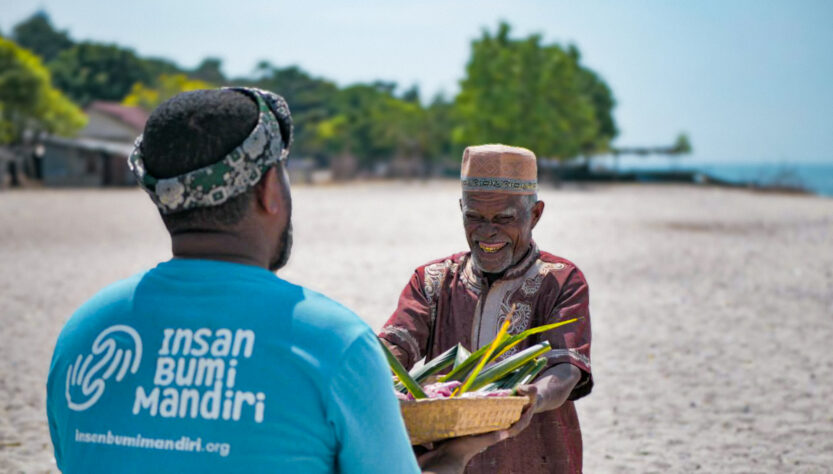
Currently, sacrificial services can also be carried out easily and practically, one of which is through the Sacrifice in the Interior program from Insan Bumi Mandiri. Through Sacrifice in the Interior, you can carry out sacrifices while sharing with relatives in the interior of Indonesia.
PakarPBN
A Private Blog Network (PBN) is a collection of websites that are controlled by a single individual or organization and used primarily to build backlinks to a “money site” in order to influence its ranking in search engines such as Google. The core idea behind a PBN is based on the importance of backlinks in Google’s ranking algorithm. Since Google views backlinks as signals of authority and trust, some website owners attempt to artificially create these signals through a controlled network of sites.
In a typical PBN setup, the owner acquires expired or aged domains that already have existing authority, backlinks, and history. These domains are rebuilt with new content and hosted separately, often using different IP addresses, hosting providers, themes, and ownership details to make them appear unrelated. Within the content published on these sites, links are strategically placed that point to the main website the owner wants to rank higher. By doing this, the owner attempts to pass link equity (also known as “link juice”) from the PBN sites to the target website.
The purpose of a PBN is to give the impression that the target website is naturally earning links from multiple independent sources. If done effectively, this can temporarily improve keyword rankings, increase organic visibility, and drive more traffic from search results.