Not a few of us are trapped in the monarchical system of giving a mandate or trust for something to someone who does not have scientific capacity or integrity, just based on that that person is “the son of that figure” or “that child has the lineage of a king, priyayi or kyai.”
We often encounter this phenomenon, especially in an Islamic educational institution (Islamic boarding school), when a kyai who leads the Islamic boarding school dies, where the baton often falls to the crown prince, namely his children. In fact, it is often found that the descendants of these kyai do not have sufficient scientific capacity to provide teaching or have knowledge about appropriate management in managing Islamic boarding schools.
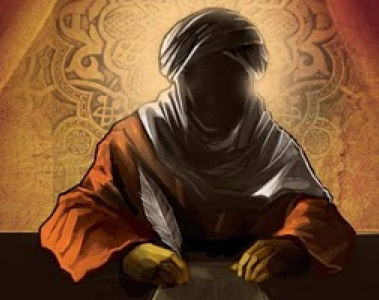
In the midst of many of the phenomena mentioned above occurring, sometimes we have to learn and reflect from the story of Shaikh Imam Izzudin bin Abdissalam, one of the scholars and teachers at an Egyptian Sholihiyyah Madrasah. He also earned the nickname Sulthonul Ulama.
When death was about to come to him, Caliph Bibris (one of the sultans who ruled Egypt and Syria from 1260 to 1277 AD) said to Sheikh Imam Izzudin bin Abdissalam
“Choose one of your children to lead and continue this madrasa.”

Hearing Caliph Bibris’ request, Sheikh Imam Izzudin bin Abdissalam did not immediately appoint one of his sons. He even subtly refused the caliph’s request by saying;
“None of my children are worthy.”
Sheikh Imam Izzudin bin Abdissalam’s answer made a very special history. Even though they were the children of a great scholar who was highly respected and recognized for his knowledge by the scholars. Because for Sheikh Imam Izzudin bin Abdissalam, position is not a family inheritance that should be passed on to his children.
Surprisingly, Sheikh Imam Izzudin bin Abdissalam actually appointed one of his students who was truly worthy to carry on the baton to lead the madrasa.
The lesson that can be learned from the story above teaches us that knowledge and trust are not subject to pseudo-nepotism. This is what is called true professional integrity.
So this story also indirectly conveys the message that position is not about lineage, but about a person’s credibility to be able to carry out responsibilities in a trustworthy and honest manner.
Also read: Leadership in Islamic Education, Lessons from Ihya’ Ulumuddin
Author: Dimas Setyawan Saputro
Editor: Sutan
Berita Terkini
Berita Terbaru
Daftar Terbaru
News
Jasa Impor China
Berita Terbaru
Flash News
RuangJP
Pemilu
Berita Terkini
Prediksi Bola
Technology
Otomotif
Berita Terbaru
Teknologi
Berita terkini
Berita Pemilu
Berita Teknologi
Hiburan
master Slote
Berita Terkini
Pendidikan
Resep
Jasa Backlink
Slot gacor terpercaya
Anime Batch